

If you have an older dog, you have probably stood in the supplement aisle with the same question I had last fall: Cosequin or Dasuquin? Both come from Nutramax Laboratories, both are made for dogs whose joints are starting to complain, and both have a loyal following. I spent a good while comparing labels before I chose Cosequin for my dog, Biscuit, and I want to walk you through what I found. Biscuit is a 74-pound golden retriever who turned 10 in March. On a warm afternoon you would hardly know he is aging. But on a cold Green Bay morning, his hips are stiff, and he comes down our steep carpeted stairs one careful step at a time. He pauses before he jumps into the back of the car, and last October he stood at the bottom of the stairs for a full minute before he tried the first step. I stood with him, pretending I was not watching. Our vet calls it normal wear and tear. I call it hard to watch.
So I did what I do with any decision that matters: I went to the library, read the studies, and made a spreadsheet. The short answer is this. Cosequin is the sensible first choice for most aging dogs, especially if you want a proven formula at a more approachable price. Dasuquin adds an extra ingredient called ASU that helps some dogs but costs noticeably more. For Biscuit, Cosequin was the right call. Here is why, and here is the part I wish someone had explained to me before I started reading labels at the kitchen table.
| Cosequin | Dasuquin | |
|---|---|---|
| Price | Lower cost per chew, easier to keep up with over months and years | Costs more for the same size bottle |
| Core ingredients | Glucosamine and chondroitin, the two most studied ingredients in canine joint care | The same glucosamine and chondroitin base |
| Extra ingredient | A simpler label, with nothing you do not need | ASU, which some studies suggest helps protect cartilage |
| Ease of giving | Chewable tablet that most dogs take like a treat | Chewable tablet, same idea |
| Research history | Decades of use and a long record of published studies | A newer formula with less long-term data |
| Best for | Mild to moderate stiffness that needs steady daily support | Dogs who have not responded to glucosamine alone |
Where Cosequin Wins
Cosequin wins on value, and for a daily supplement that you give every single morning for years, value matters more than people expect. I sat down with my spreadsheet before I bought anything. The cost per chew is noticeably lower with Cosequin, and since this is a product Biscuit will take for the rest of his life, that difference adds up fast. The 132-count bottle, at Biscuit's dose of two chews a day, lasts us about two months, which means I buy roughly six bottles a year. I would rather pay a little less each month and never miss a dose than buy the pricier option and feel tempted to stretch it. A supplement only works if you actually give it, and the one you can afford to keep buying is the one you will keep giving.
It also wins on simplicity. Cosequin has a long track record, a straightforward label, and a dose that is easy to adjust as your dog's weight changes. When I called our vet to ask about starting Biscuit on it, she nodded and said it was a reasonable place to begin. That is exactly what I wanted to hear: a supplement that a careful vet does not have to think twice about. Nutramax Laboratories has been making joint supplements for dogs for decades, and there is something quietly reassuring about that when you are the one standing at the kitchen counter with a pill in your hand at 7 in the morning.
And here is what I actually saw, because that is the part that matters. We started on the first Monday of November. For the first two weeks I did not notice anything, and I told myself not to expect a change, because Biscuit's stiffness has been building slowly for a year and I knew better than to expect a quick fix. Then, around the third week, I realized he was taking the stairs ahead of me instead of waiting for me to go first. On the morning of November 22, the thermometer read 14 degrees, and he still trotted down the stairs to the back door without the careful, one-step-at-a-time pause he had been doing since September. He still has stiff mornings, especially after a cold night, and I am not going to tell you Cosequin fixed him. But the change was real enough that I marked it on the calendar.
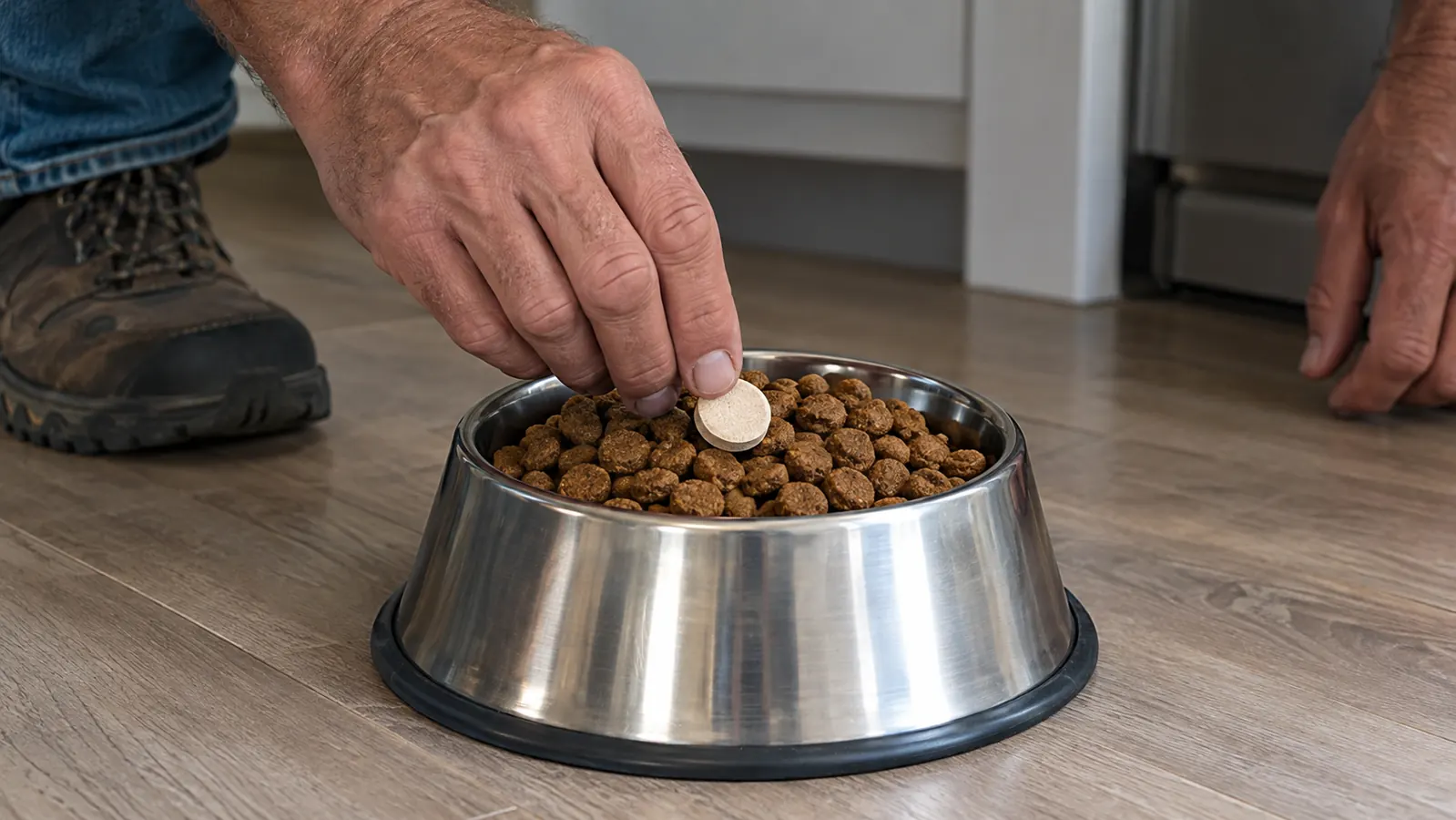
The routine matters as much as the bottle. I give Biscuit his two chews with breakfast, right after his morning walk, and the bottle lives on the kitchen counter next to the coffee maker so I cannot miss it. Consistency is the whole point with a joint supplement. It is not a medicine you give until the problem goes away. It is support you give every day, and the benefit builds slowly, like a habit. That is another reason I leaned toward Cosequin: at a dose we can afford to keep up, we actually do keep it up, and six months in, that consistency is what I credit for the change I saw.
Understanding a little of the science helped me stick with it, so let me share the short version. Glucosamine is a building block for cartilage, the cushioning tissue inside a joint. Chondroitin helps that cartilage hold water so it stays springy instead of wearing thin. Think of Cosequin as giving the body the raw materials it needs to maintain the joints, rather than masking discomfort the way a painkiller would. That is why the change showed up slowly over weeks instead of in an afternoon, and why the daily habit matters more than the brand name on the bottle. It is also why our vet told us to give it a full eight weeks before we judged it.
Where Dasuquin Wins
I want to be fair, because Dasuquin does win in one important category: it has an extra ingredient that Cosequin does not. ASU, short for avocado soybean unsaponifiables, is added to support cartilage in a different way than glucosamine and chondroitin do. Some research suggests that combination helps dogs with more advanced joint issues, which is why many vets recommend Dasuquin for dogs who have not improved on a basic glucosamine supplement. It is not a gimmick and I do not want you to read it as one. The ingredient is real, the research behind it is real, and for the right dog it can make a real difference.
If your dog is already stiff despite taking a plain glucosamine product, or if your vet has told you that your dog's joints look rough on x-rays, Dasuquin is worth asking about. It costs more, and you should not switch to it without a conversation with your vet. I asked our vet directly whether Biscuit should be on it. She said that for a dog whose stiffness is mostly cold-morning slowness, without a diagnosis on x-rays, the extra ingredient was unlikely to be worth the added cost. That is the honest answer you want from a vet: not the most expensive option, the right one.
The cost difference is the other side of the same coin. Dasuquin costs more per chew, and because it is a daily supplement, that difference compounds over the months and years. I have a friend whose border collie has hip dysplasia and has been on Dasuquin for three years, and that dog gets around better than anyone expected when she was diagnosed. That is exactly the kind of dog the extra ingredient is for: a dog with a real diagnosis, not a dog who is just slow on a cold morning. Biscuit is not that dog, and it took a conversation with our vet to be sure, which is exactly the conversation you should have before you spend the extra money.
There is one more thing worth knowing about Dasuquin, and it is the reason I still keep it in mind. If Biscuit's stiffness ever gets worse, if he starts refusing the stairs or struggling on our evening walk, our vet and I already have a plan: we will talk about whether it is time to try the ASU formula. Dasuquin is not a forever no for us. It is a not yet. I would rather have that conversation with my vet when the time comes than guess my way through it, and I think you should do the same.
Around the third week of November, Biscuit started taking the stairs ahead of me instead of waiting at the bottom.
Start with the formula that has helped dogs for decades
Cosequin from Nutramax Laboratories is the steady, well-studied choice for an aging dog. Check today's price on Amazon and see if it is right for your dog.
Amazon Check Today's Price on Amazon →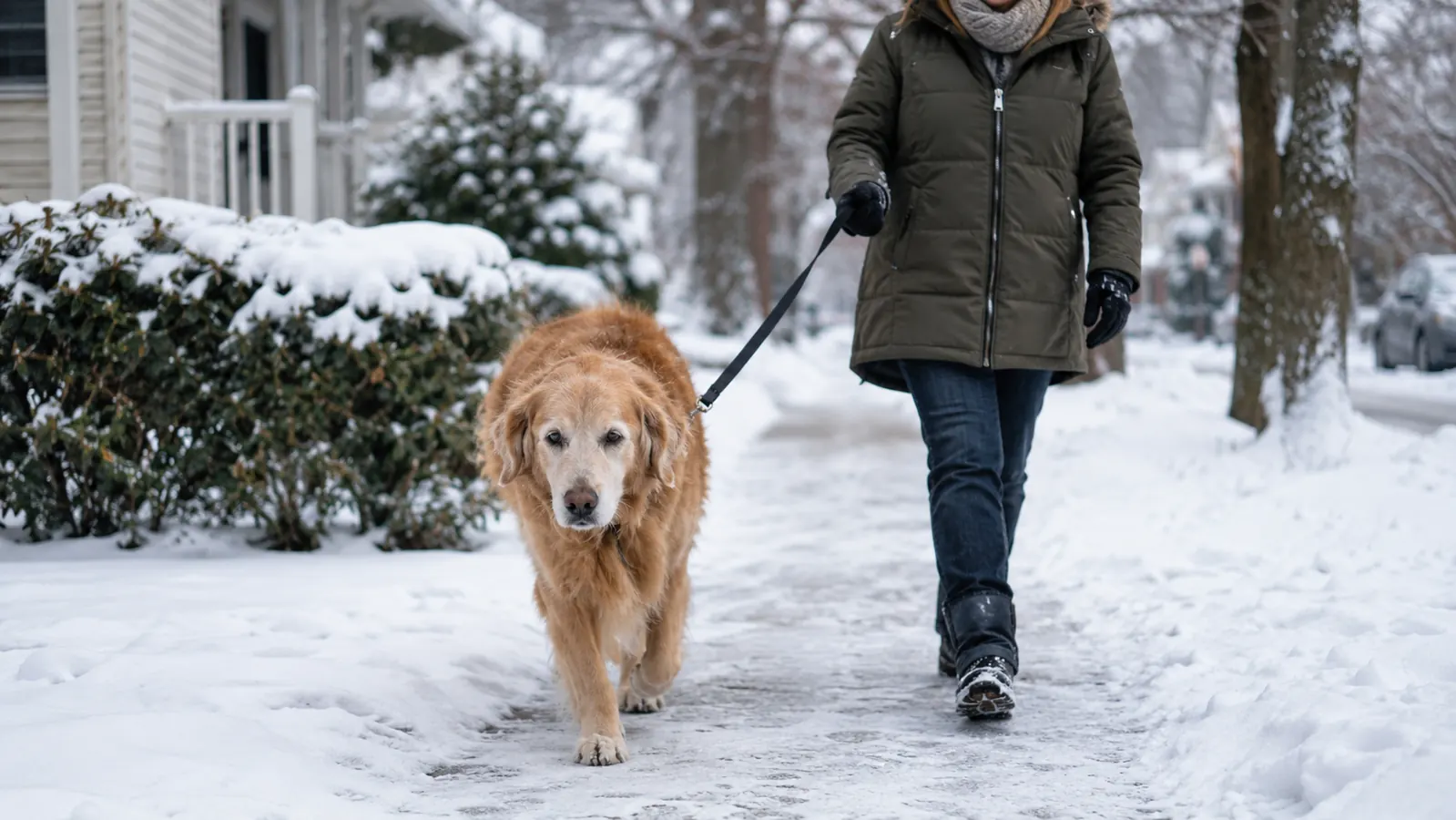
Who Should Buy Which
Buy Cosequin if your dog is in that middle stage of aging: a little slower on the stairs, a little stiffer after lying down, but still happy to trot out the door for a walk. That is exactly where Biscuit is, and Cosequin has been a good fit. It is also the easier choice if you are paying for this yourself month after month, because the lower cost per chew makes it a habit you can actually keep. If that describes your dog, Cosequin is the place to start, and it may be all you ever need.
Buy Dasuquin if your dog has a confirmed joint diagnosis, has already tried a glucosamine supplement without much change, or if your vet specifically recommends the ASU formula. Dasuquin is the stronger tool for a dog who needs more help, and I would not want anyone to skip it out of false economy. Do not start either one without checking with your vet first, especially if your dog is on other medications, because supplements can interact with things like anti-inflammatories. When in doubt, ask. That is the advice I give everyone, and it is the advice I followed myself.
One more piece of advice from someone who spent 31 years as a school librarian: read the label. Look for the active ingredients and the amounts, not the pretty packaging. A joint supplement is only useful if it contains a meaningful dose of glucosamine and chondroitin, and the label should tell you exactly how much is in each chew. That is one reason I trust Cosequin: the label is specific, the dose is clear, and Nutramax Laboratories has been answering questions about this formula for a very long time. If a bottle will not tell you what is in it and how much, put it back on the shelf.
One more thing I learned, and I think it is the most important thing: the supplement is only one piece. Biscuit gets his chews with breakfast every morning, but he also gets his two walks, rain or shine, and I keep his weight steady, because extra pounds are the hardest thing on an older dog's joints. Our vet said it better than I can: a supplement can support the joints, but it cannot outwork the scale. Cosequin is part of Biscuit's routine, not the whole of it, and starting it was the beginning of taking his comfort seriously, not the end. If you are reading this because your dog is slowing down, I hope you talk to your vet, take your time, and find the thing that helps your dog move a little easier. That is all any of us want.
Give your aging dog the steady support of Cosequin
Cosequin is the proven daily supplement from Nutramax Laboratories that I chose for Biscuit. See today's price on Amazon and talk to your vet about whether it fits your dog's routine.
Amazon Check Today's Price on Amazon →