
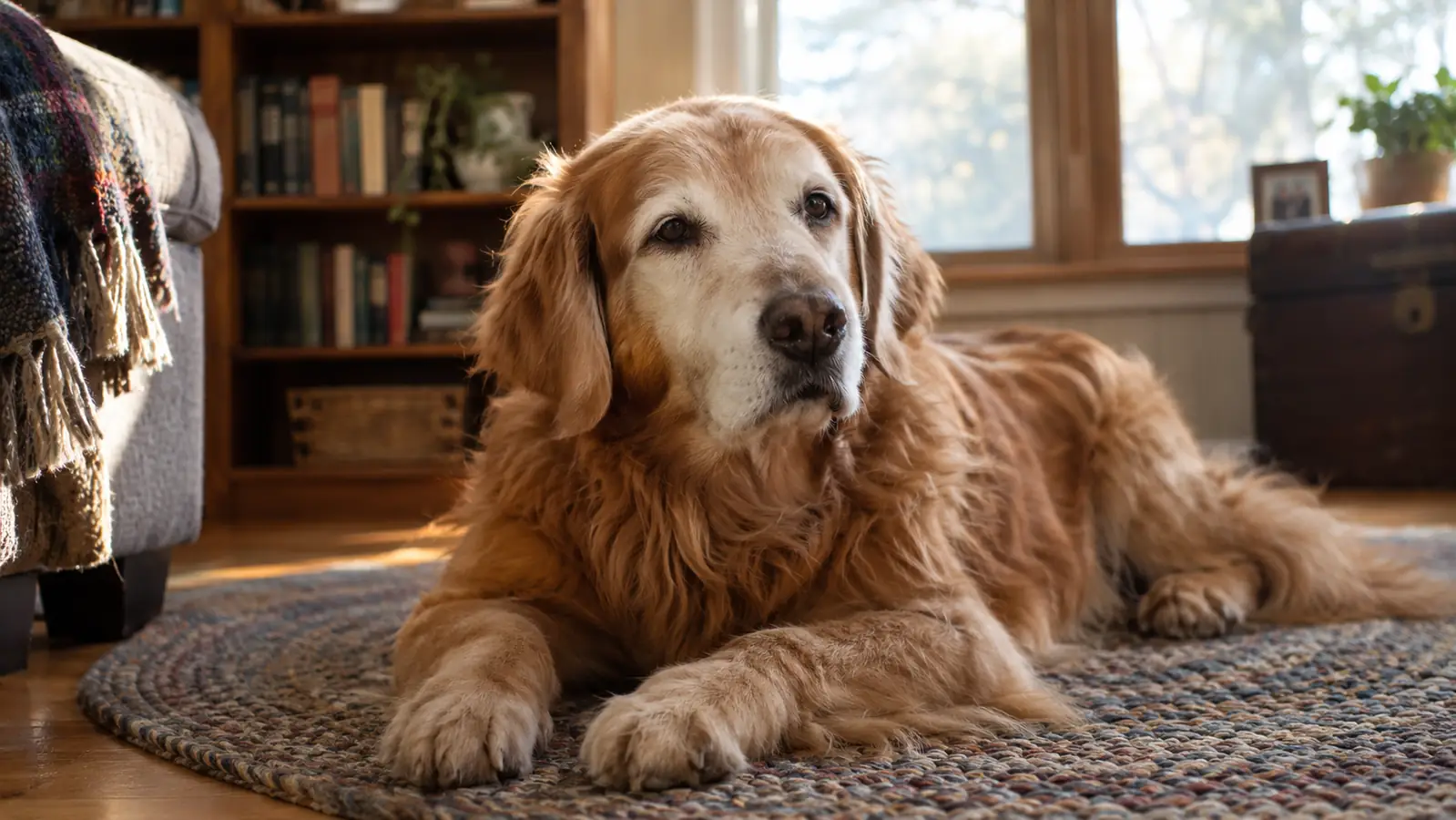
If you have an older dog, you know the exact moment I mean. The one where they stand at the bottom of the stairs and look up instead of bounding. The pause before they step into the car. The way a cold morning turns a familiar walk into something they seem to measure first. That was Biscuit this past winter: 10 years old, about 74 pounds, a golden retriever who still loved his evening walk but needed a few extra seconds to get going.
I am not the sort to reach for a supplement before I have read the label and talked to our vet. But after a long conversation about hips, elbows, and what we could reasonably do at home, our vet said something that surprised me: collagen was worth considering, not as a cure, but as part of the daily routine. That sent me down a rabbit hole of research, and it is how I found The Missing Link Collagen Care Hip & Joint Supplement Chews. This is how we used them, what I watched for, and what I would tell a friend who asked.
A chew that made our cold-morning starts a little easier
The Missing Link Collagen Care chews are the ones we have kept in the routine. If you are tired of watching your dog hesitate at the stairs, this is a reasonable place to start.
Amazon Check Today's Price on Amazon →Step 1: Talk to your vet before you change anything
I know it is tempting to skip this step. You have read the reviews, you have the product in your cart, and you just want to try it. But your vet knows your dog's history, their weight, their bloodwork, and the medications they are already on. Supplements can interact with other things, and what helps one dog may not be appropriate for another. Our vet gave us the green light and also told us what to watch for: any digestive upset, any change in appetite, and whether the stiffness seemed to improve or stay the same over a few weeks.
Bring the label with you, or at least the ingredient list. The Missing Link chews include collagen, glucosamine, chondroitin, and a few other joint-friendly ingredients, and your vet can tell you whether those make sense for your dog's specific situation. Biscuit had no other health conditions, so the answer was yes. If your dog has a sensitive stomach or a known allergy, this conversation matters even more.
One more thing: write down what your dog is like right now. How long it takes them to get up from a nap, how they handle the stairs, how they step into the car. You will want that baseline later, because change happens slowly and memory is not reliable.
Step 2: Start with the right dose and give it with food
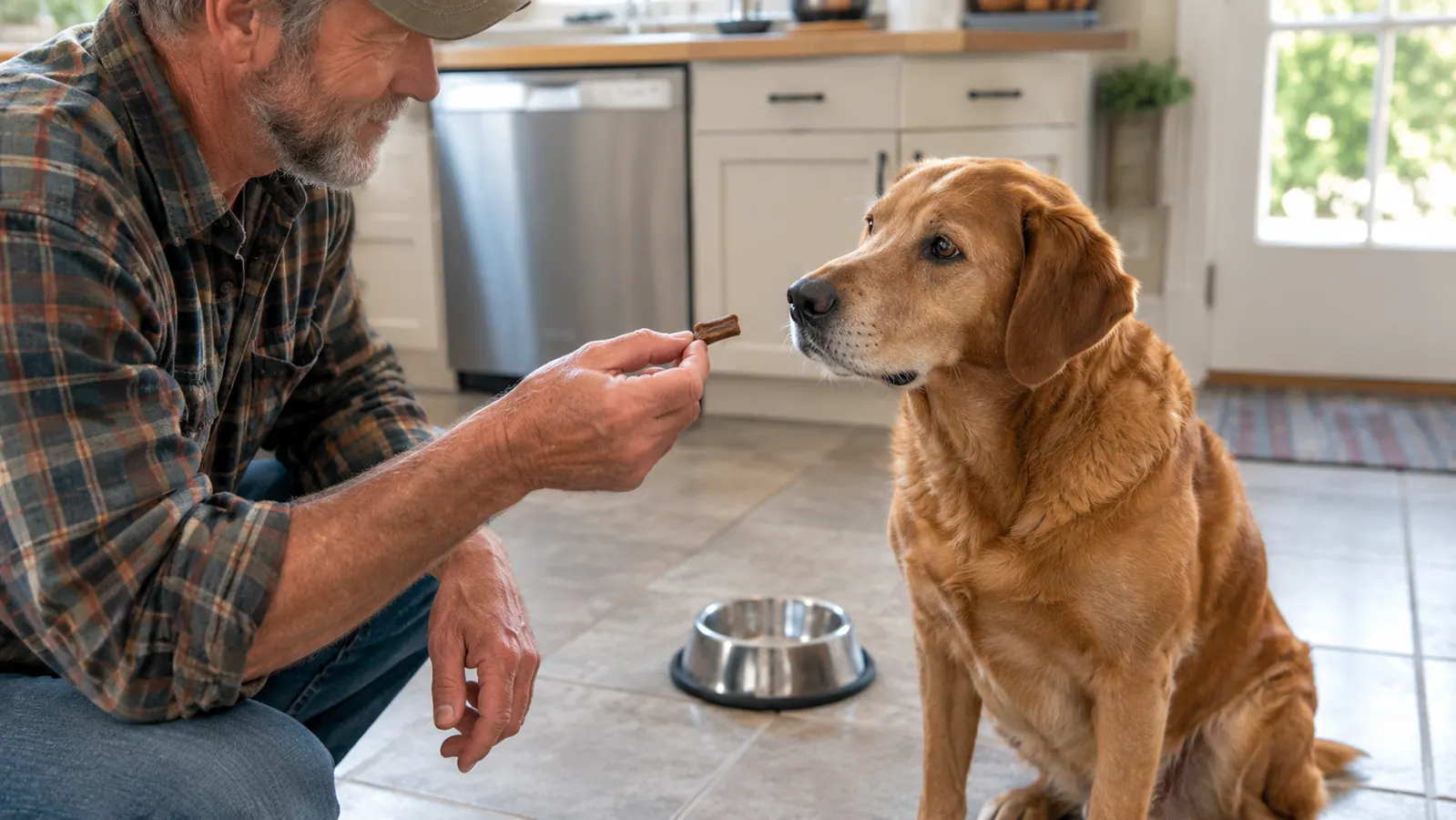
The Missing Link Collagen Care chews come in a 60-count container, and the label gives a dosage range based on weight. For Biscuit, at 74 pounds, that meant one chew a day. I gave it to him with his breakfast, right after his morning kibble, so it was part of a routine rather than a treat he had to earn. That consistency matters. A supplement only works if you actually give it every day, and attaching it to a meal makes that nearly automatic.
The chews are soft enough to break apart if you need to, which helped in the first week. Biscuit has never been picky, but I wanted him to take it happily rather than suspiciously. I broke the first few chews into smaller pieces and mixed them into his bowl. By the third day he was eating them whole, and by the end of the first week he would sit and wait for it the way he waits for a treat.
Do not be tempted to double the dose because you want faster results. More is not better, and the label exists for a reason. If you are unsure, ask your vet. We stuck with one chew a day for the full eight weeks, and that was enough to see a difference.
I keep the tub on the counter right next to his food scoop. That sounds like a small thing, but the most common reason a supplement stops working is that someone stops giving it. If the chew is the first thing I see when I measure his breakfast, it gets given, every day, even on the mornings when I am running late for church.
Step 3: Keep moving, but adjust the pace
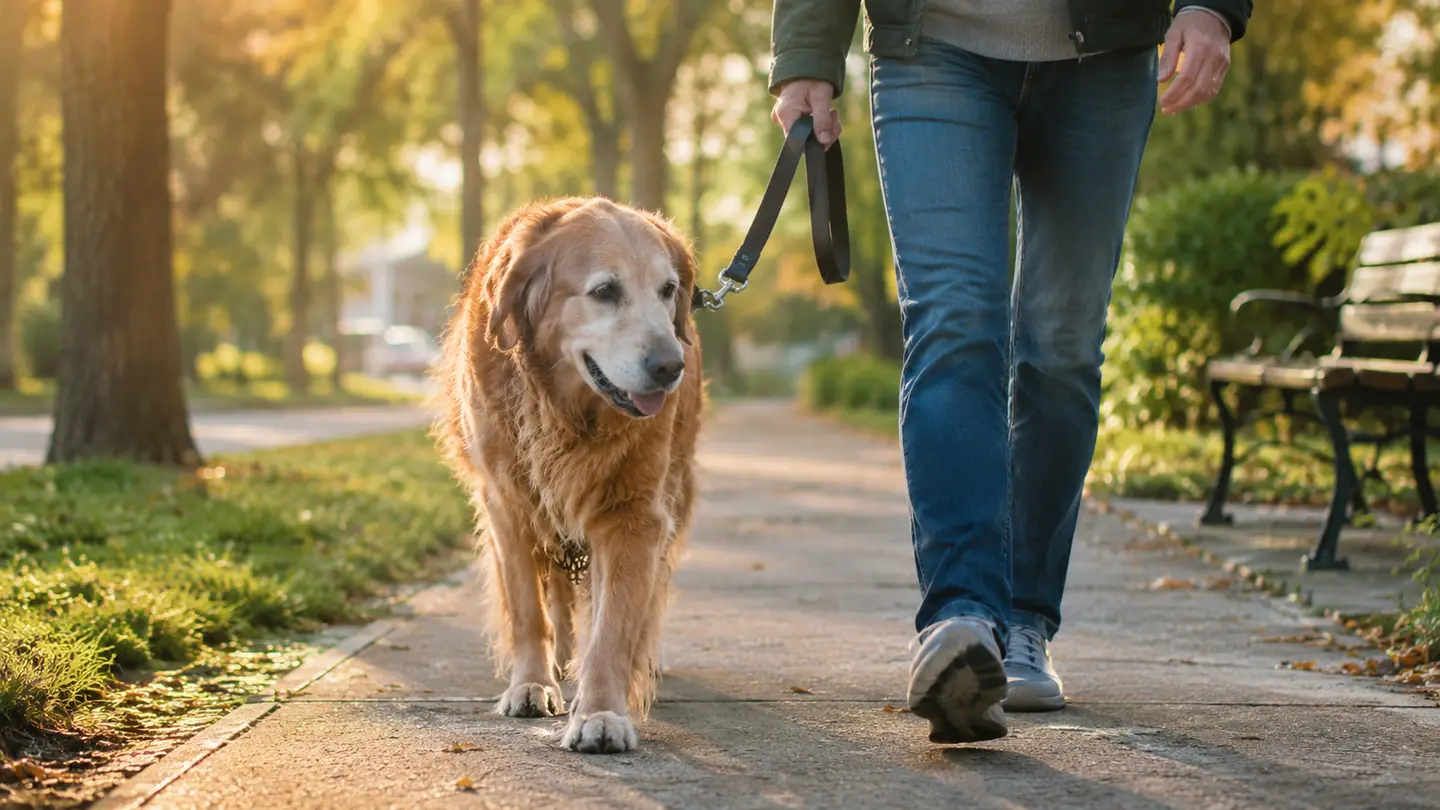
A supplement is not a substitute for movement. In fact, the two work together. The whole point of keeping an older dog moving is to maintain the muscle that supports those stiff joints, and the collagen is there to support the connective tissue. So we kept our morning and evening walks, but we changed how we did them.
Instead of one long walk, we split it into two shorter ones. Instead of letting Biscuit bound up the curb, I slowed us down at the edges of the sidewalk. On the coldest mornings, we walked a little later in the day, when the sun had warmed things up. Small changes, but they added up. He still got his walk, and he still got to sniff everything, but he was not starting from a cold, stiff standstill.
I also stopped asking him to jump into the car. I bought a small set of folding steps and kept them in the trunk. It felt like a small surrender at the time, but it was really just common sense. Protecting the joints while you work on the underlying support is the whole game.
I also changed where we walk. Pavement is hard on older joints, so when the weather allows we take the grassy edge of the park instead of the sidewalk. Biscuit seems to like it better, and he lingers to sniff, which slows the pace in a way that is good for both of us. On icy days we stay inside and do a few slow laps of the hallway instead of skipping movement altogether.
Step 4: Watch for small changes, not overnight results
Here is the honest part: you will not see a difference overnight. Anyone who promises that is selling something. What you are looking for is a slow shift over a few weeks. For Biscuit, the first noticeable change came around the three-week mark. He started coming to the kitchen faster when he heard the treat jar, which is not exactly a medical metric, but it was a sign that getting up was less of a production.
By week five, he was taking the stairs at a normal pace instead of pausing on the landing. By week eight, the morning stiffness was still there, but it seemed to fade faster. He would be slow for the first few minutes of a walk, then warm into it. That was the pattern our vet told me to expect: not a cure, but a smaller gap between stiff and moving.
Keep a simple note on your phone or a calendar. Just a line each week: how the stairs went, how the car step went, how the first five minutes of the walk went. You will be surprised how much easier it is to see progress when you write it down.
Step 5: Be patient and stay consistent
The hardest part of any supplement routine is the middle. The first week is exciting, the second week feels like nothing is happening, and the third week is where most people give up. I almost did. But our vet had told me to give it a full eight weeks before judging, and I am glad I listened.
What helped me was tying the chew to something I already did every single day. Biscuit gets it the moment I set his breakfast bowl down, before I pour my own coffee. After a couple of weeks it stopped being something I had to remember and became part of the morning, the same way his leash hangs by the back door. If your days are less predictable than mine, set a phone reminder for the first month until the habit sticks.
Consistency matters more than anything else. One chew a day, every day, with breakfast. The same walk schedule, the same warm-up, the same attention to how he was moving. By the time the container was empty, I had a clear answer: Biscuit was moving a little more easily, and the change was real enough that I ordered another one.
If you decide to try The Missing Link Collagen Care chews, give them a fair chance. Take the baseline notes, stick to the routine, and resist the urge to judge after a week. Your dog is not going to turn back the clock, and no supplement will do that. But a little more comfort on a cold morning is a win worth working for.
What Else Helps
The Missing Link Collagen Care chews were the centerpiece of our routine, but they were not the only thing we changed. A few other adjustments made a real difference for Biscuit, and they are worth mentioning because they cost almost nothing.
First, we trimmed his nails more often. Long nails change the way a dog stands and walks, and that puts extra strain on already stiff joints. Second, we put a rug runner on the hardwood floor at the top of the stairs, because he was sliding a little on the turns. Third, I started warming his dinner slightly in cold weather, just enough to take the chill off, which seemed to make him more willing to eat and settle in for the night.
We also kept his weight steady. At 74 pounds, Biscuit is right where our vet wants him, and I know that carrying extra weight is one of the worst things for an older dog's joints. If your dog is carrying a few extra pounds, talk to your vet about adjusting portions before you spend money on any supplement. Weight loss is the most reliable joint support there is.
And we added a rug runner on the kitchen floor, where he likes to wait for breakfast. Hardwood and tile give an older dog nothing to grip, and watching his back legs slide apart as he stood up was the moment I realized the house itself was making things harder for him. The runner was the cheapest change we made and one of the most noticeable.
By week eight, the morning stiffness was still there, but it faded faster. That was the change I could measure: not a cure, but a smaller gap between stiff and moving.
Give your older dog a fair chance at a comfortable winter
The Missing Link Collagen Care chews are the ones we kept in the routine after eight weeks of daily use. They are not a cure, but they helped Biscuit start his mornings a little more easily.
Amazon Check Today's Price on Amazon →