

The first sign was the stairs. Biscuit, our 10-year-old golden retriever, would pause at the bottom of the carpeted steps in our Green Bay house, look up, and wait a beat before climbing. Then came the mornings when he stood up slowly after lying on his bed, took a few stiff steps, and only then shook himself awake. Our vet said the word we had been circling for months: arthritis. Then she said something more useful. Start him on a joint supplement, give it a full eight weeks, and keep a little diary of what you see. She named Nutramax Laboratories Cosequin as the brand she trusted most, and that is where we began. This is that diary, written out as a plain-spoken guide for anyone whose dog has started slowing down.
I am not a veterinarian and I am not a nutritionist. I am a retired school librarian who reads labels the way I used to read the new nonfiction shelf, and I asked our vet before changing anything. What follows is the routine that worked for us, the mistakes I almost made, and the honest limits of what a supplement can do. If your dog is stiff, start with your vet. Then come back here and read this.
The chewable tablet our vet pointed us to first
Nutramax Laboratories Cosequin is the brand our vet recommended before we left the exam room. It is the supplement we have given Biscuit every morning since, and the one I would start with again if I had to do this over.
Amazon Check Today's Price on Amazon →Step 1: Ask your vet before you buy anything
I know the temptation to skip this step. The internet is full of joint supplement reviews, and the bottle is right there on the shelf. But stiffness in an older dog can come from more than arthritis. It can be a torn ligament, a nerve issue, or hip dysplasia that needs a different conversation. Our vet gave Biscuit a quick exam, watched him walk down the hallway, and confirmed that his hips and elbows were stiff but stable. That exam changed what we did next, because it told us a supplement was appropriate rather than a delay.
Ask your vet three questions while you are there. Is a joint supplement appropriate for this dog? Which form should I use, a chewable tablet or a soft chew? And how long should I give it before we judge whether it is working? Write the answers down. You will forget the details by the time you are standing in the supplement aisle.
One more thing I learned the hard way: tell the vet about every other supplement your dog takes. Biscuit was already getting a fish oil capsule for his coat, and our vet wanted to know the dose before she gave the go-ahead on Cosequin. It was a five-minute conversation that saved me from guessing. I also brought the bottle of fish oil with me to that appointment, label and all, so the vet could read the milligrams herself. That is the kind of detail a librarian cannot help but bring.
Step 2: Pick the right Cosequin form and dose
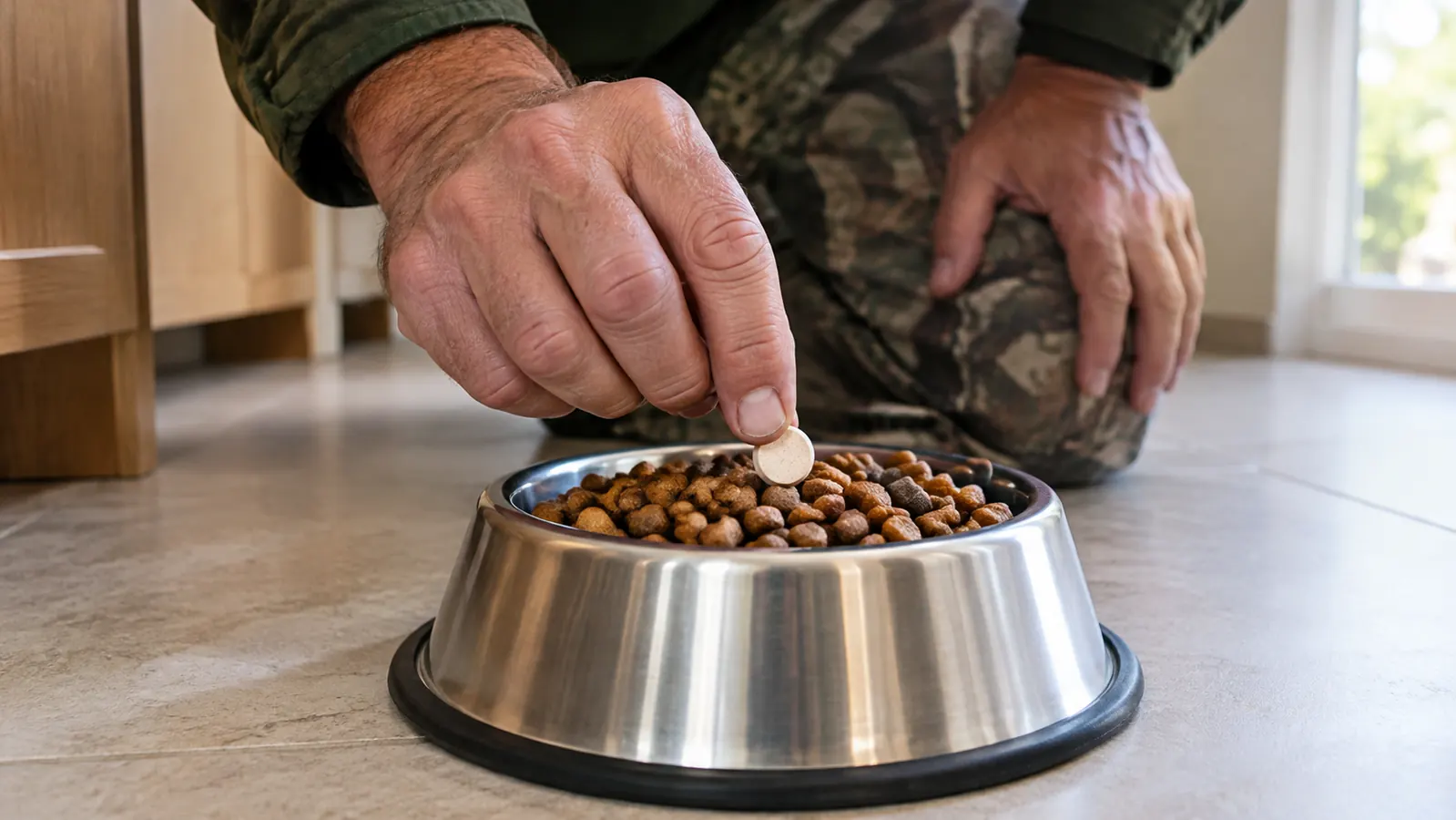
Cosequin comes in a few forms, and the right one depends on your dog's size and your own patience. We use the chewable tablets from Nutramax Laboratories, the 132-count bottle, because Biscuit is about 74 pounds and the dosing is straightforward. The tablets have a flavor dogs tend to accept, and they are scored so you can adjust the amount as your vet directs. On the morning we started, I set the bottle on the counter, read the label twice, and still called the vet's office to confirm the dose before giving Biscuit his first tablet. Better to ask a silly question than to guess.
Read the label on the back of the bottle, not the front. The front says the brand name in big letters. The back has the active ingredients and the dosing chart, and that is the part that matters. Cosequin's formula includes glucosamine and chondroitin, which are the building blocks that support cartilage, along with MSM, which some vets describe as supporting joint comfort. The exact amounts are printed on the label, and I checked them against what our vet recommended before we started. I keep a small magnifying glass in the kitchen drawer for exactly this kind of reading, and I needed it for the fine print on that bottle.
If your dog is smaller or larger than Biscuit, follow the weight chart on the bottle and confirm it with your vet. If your dog is a picky eater, the soft chew version is worth considering, but the chewable tablets worked fine for us. Biscuit eats his with breakfast, and we have not had a single refused dose in the months we have been doing this. I do hide the tablet in a small spoonful of plain canned pumpkin on the days he seems less interested in his bowl, which is maybe once every two weeks. It is a small trick, but it keeps the routine from becoming a battle.
Step 3: Give it every day, at the same time, for eight weeks
This is the step most people skip, and it is the one that matters most. A joint supplement is not a pain pill. It does not work in an hour. It works by giving the body the materials it needs to maintain cartilage, and that takes time. Our vet was explicit: give it daily for eight weeks before judging it. I marked a calendar in the kitchen, and I did not let myself conclude anything until that calendar said eight weeks. I used a red pen for the first week, then switched to blue, which sounds silly, but it made the passing weeks visible in a way a checklist never did.
We give Biscuit his tablet with breakfast, every single day, including weekends and holidays. The routine matters for two reasons. First, consistency is what makes the supplement effective. Second, a daily habit is easier to keep than a sometimes habit. If you miss a day, do not double up the next day. Just give the normal dose and get back on schedule. We have missed exactly one morning in all these months, when we left town for a funeral and I forgot to pack the bottle. Biscuit was fine, and we simply resumed the next day.
Keep the bottle somewhere you will see it. I keep ours on the kitchen counter next to the coffee maker, which sounds like a small thing, but it is the difference between a supplement that gets given and a supplement that gets forgotten. If you are the sort of person who needs a phone reminder, set one. Whatever works, do that. I also refill the bottle from the pantry the moment it gets low, so we never run out on a Sunday when the store is crowded.
Step 4: Watch the right things, and write them down
Here is what I wish someone had told me before we started: do not watch for a sudden transformation, because you will be disappointed. Watch for small changes, and write them down. I kept a simple notebook, one page per week, with three lines. How did Biscuit do on the stairs this morning? How long did it take him to stand up from his bed? How was his evening walk around the block? I dated every entry, the way I used to date the circulation logs at the library, so there was no mistaking which week I was looking at.
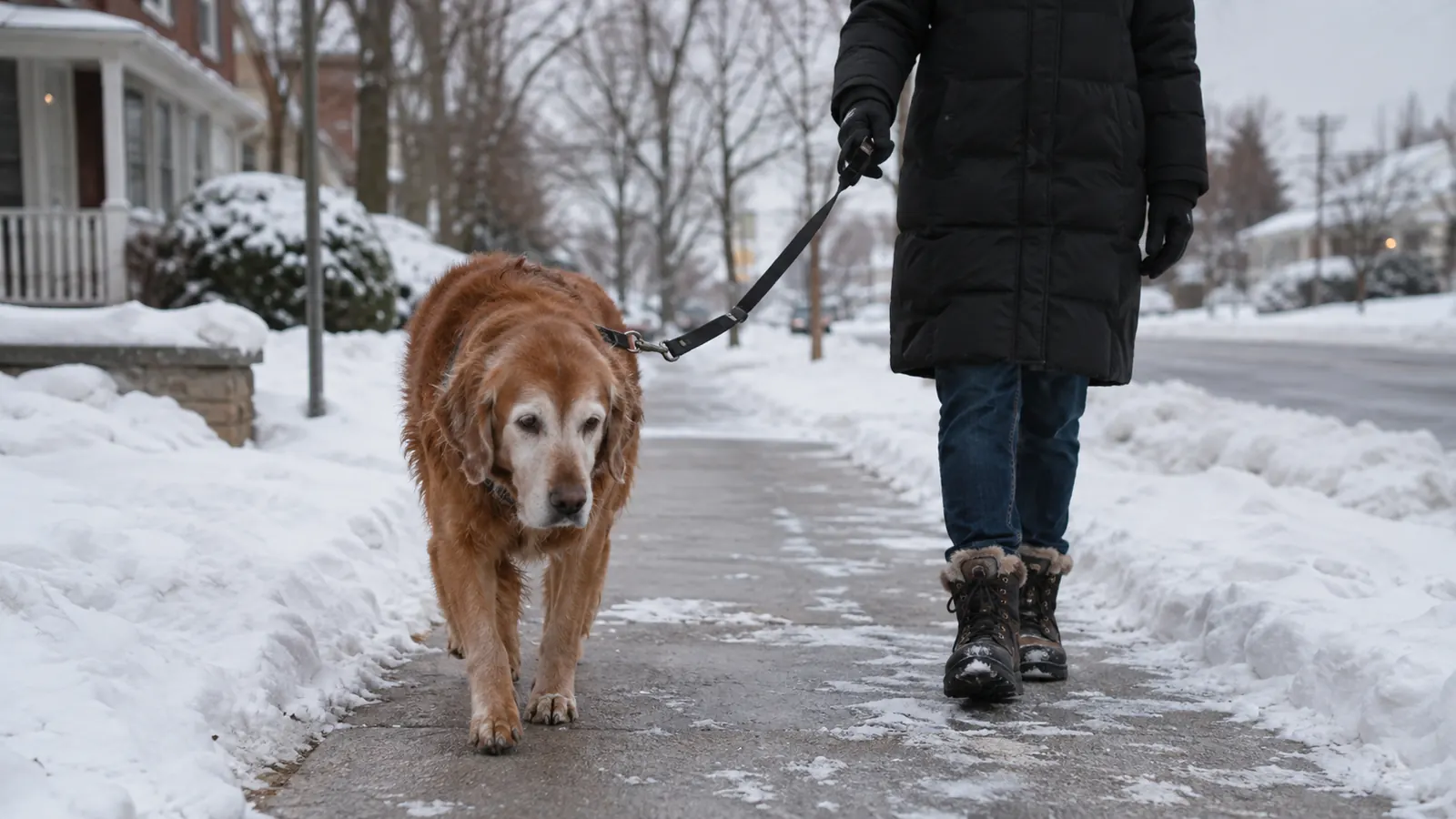
The changes were gradual. Around week three, I noticed he stopped pausing at the bottom of the stairs. Around week five, he stood up from his bed in one motion instead of two. Around week seven, he trotted the last block of our evening walk instead of walking the whole way. None of these were dramatic. Each one was a small thing I would not have noticed if I had not been writing it down. The week four entry, for example, says only that he took the stairs at a normal pace twice that morning. That is not the stuff of a testimonial, but it was real progress.
The notebook also kept me honest. On days when Biscuit seemed stiff, I could look back and see that he was better than he had been a month earlier. That is the value of a record. Your memory will compress four weeks into a vague impression. A notebook will not. On the worst morning of the winter, a Tuesday in January when the temperature never got above five degrees, I wrote down that he was slow but willing. Two weeks later, I read that entry and realized how far he had come.
Step 5: Pair the supplement with the right daily habits
A supplement works best when it is part of a bigger routine, and this is where I have the most opinions. Biscuit still gets his morning and evening walks, but we shortened them slightly and added a slow warm-up. The first five minutes are a gentle stroll, not a pull toward the nearest fire hydrant. On cold winter mornings, which are common here in Wisconsin, I let him do his business in the backyard first and save the walk for later in the day when his joints have had time to loosen. On the coldest days, when the wind is coming off the bay, we skip the long walk entirely and do two shorter ones instead.
We also changed where he sleeps. His bed is now in the warmest corner of the living room, off the floor, and he has a second bed upstairs so he does not have to climb the stairs just to lie down. Small changes, but they add up. A dog with stiff hips does not need less life. He needs a life with fewer unnecessary obstacles. I also put a second water bowl upstairs, next to his bed, so he does not have to go down the stairs every time he is thirsty.
Weight is the other piece, and I will be direct about it. Every extra pound is extra load on those hips. Biscuit is 74 pounds, which our vet says is right for his frame, and we keep him there by measuring his food rather than guessing. I use the same measuring cup every morning, level, not heaped, and I cut back on treats during the long winter months when his walks are shorter. If your dog is carrying extra weight, talk to your vet about a plan. That conversation may do more for your dog's hips than any supplement.
What Else Helps
Beyond the supplement and the routine, a few things made a real difference for us. A raised food bowl means Biscuit does not have to bend his neck as far, which seems to help him on stiff mornings. A nonslip rug runner at the bottom of the stairs gives him traction where he used to slide. And on the coldest days, a short indoor game of gentle fetch keeps him moving without the risk of slipping on ice. None of these are expensive. All of them are easy. The combination of Cosequin from Nutramax Laboratories, a consistent routine, and a home that works with his body instead of against it is what got us through the worst of the winter.
Around week seven, he trotted the last block of our evening walk instead of walking the whole way. That was the moment I knew the daily routine was worth it.
Start the eight-week routine tonight
If your vet has given the go-ahead, the next step is simple: pick up a bottle of Nutramax Laboratories Cosequin, mark your calendar for eight weeks, and start tomorrow morning with breakfast. That is the whole routine, and it is the one that worked for us.
Amazon Check Today's Price on Amazon →